
(Publisher’s note: Part 1 of this column published yesterday.)
By Jennifer Fairfield
In the flower garden:
Much like in the veggie garden, keeping insects under control has been a challenge lately. In my flower gardens, I’m seeing aphids on my asters, sawfly larva on my hardy hibiscus, and Japanese beetles on many other things! I’ve relied on insecticidal soap for the aphids and Neem Oil for the sawfly larva, but the best way to deal with Japanese beetles is to simply pluck them off the plants and drop them into a bucket of soapy water.
The soap coats their wings, making it impossible for them to get out of the water, and they eventually drown. The best time of day to do this is in the afternoon, when it has warmed up. Getting as many as you see on a daily basis will help keep them under control. If you wait too long, the few you have will suddenly turn into a mob, as they don’t like to dine alone, and once one has found your garden, it will send out signals to all its friends to come and join it.
If you really don’t have the time to use this method, Captain Jack’s Dead Bug Brew can be effective, but it can also be harmful to beneficial insects, such as bees, so use it carefully.
If you are using insecticides of any kind, be aware of when to apply them. Different insects are active at different times of day, and some pesticides work best if sprayed directly on the pest. Also, be aware of bee activity in your flowers, and don’t spray any insecticides when you see bees around, or at least do targeted spraying, instead of broadcast spraying, to avoid killing bees.
Always read labels completely and follow instructions carefully. Regardless of whether you use organic or non-organic products, they are poisons, and can be harmful to bees, as well as you, if not used properly.
Be sure to fertilize roses throughout the month but stop fertilizing at the end of the month to allow the new growth to harden off before winter. Also remove diseased leaves immediately, and pick up any that have fallen. Aphids and mites can be major rose pests, and can cause serious damage if not kept under control. Careful spraying when these pests are spotted is generally all that is necessary. These tasks, along with regular fungicide spraying will help keep your roses healthy.
As in your vegetable garden, keep weeds under control in the flower garden, so they don’t compete with your flowers for moisture and nutrients. Cut back perennials that have finished blooming.
To keep your potted annual flowers looking great all summer long, be sure to fertilize them. With frequent watering, fertilizer tends to get flushed out of the container, so regular feedings are a must. Also, don’t forget to deadhead. By removing dead flowers, you encourage the growth of new ones throughout the season.
Trees & Shrubs:
When you are keeping track of how much water your vegetable garden gets, also keep that in mind for any trees and shrubs planted this year. Newly planted trees and shrubs (really any plants) aren’t as efficient at taking up the water in soil as established ones. More established plants have deeper roots and can use even small amounts of moisture from the soil, but for the ones still getting established, you have to be sure that the soil is kept moist for them.
Do not apply fertilizer to trees or shrubs after the 4th of July, to avoid a flush of new growth that doesn’t have time to harden before winter.
Finish up any pruning of trees and shrubs this month or early next. Pruning too late in the season can encourage new growth that will not have time to harden off before winter sets in.
Scout your boxwoods for Box Tree Moth Larvae. Box Tree Moths are an invasive pest that are doing significant damage to boxwoods in at least 13 counties in Michigan, but there are things you can do to help keep them under control and keep your plants from succumbing to their destructiveness. Find out more about the pests and how you can help control them from the Michigan State University’s Extension Service.
Lawn:
If the weather people are only partially right in their forecast, and we get the excessive heat they are calling for but not as much rain, leave your grass between 3 and 4 inches tall to help it retain moisture during the hot spells. Longer grass helps suppress weeds. It is also helpful to stay off your lawn as much as possible, especially with heavy lawn equipment, when it’s hot and dry.
The larva of the Japanese beetles we’re seeing now are the grubs that will be eating your grass roots later in the season, causing patches of brown, dead grass that, unlike grass that is dormant, won’t be growing back. If you are seeing a lot of adult beetles now and can’t keep them under control (a next-to impossible task), the best thing you can do is to control the larva.
Milky spore and beneficial nematodes are good non-chemical control options. Milky spore is a bacterial disease that kills the grubs when they ingest it. It can be effective for many years, but also takes a few years to kill off all of the grubs, so don’t expect immediate results. Nematodes are small round worms that enter the grub’s body and release a bacteria that kills the grubs within a few days. Both of these products should be applied when grubs are active, which is generally April to May and August to November.
For the Birds:
To help birds deal with the heat, keep birdbaths clean and full. Just be sure to dump the water and refill it every day to discourage mosquitoes from laying eggs or destroy those they have laid.
Keep hummingbird feeders cleaned out and filled. Sugar water left out in the heat for a number of days can breed bacteria that is harmful to the beautiful birds visiting your feeders, so be sure to clean them out every few days.
According to the Cornell Lab of Ornithology’s 2025 State of the Birds in the USA report, “About a third of all American bird species are of high or moderate concern due to low populations, declining trends, or other threats.” But, there are things you can do to help the birds, including using fewer pesticides and dedicating areas of your yard to habitat such as trees, flowering plants, shrubs, and other non-lawn and non-hardscape uses – in other words, just let some of it go wild.
Leave leaves in the fall to give insects places to overwinter. Those insects are food for birds. When choosing new plants for your yard, choose natives. Native plants provide food for more of our native insects, which again provide more food for birds. Plant trees and shrubs that bear fruit that birds such as robins and waxwings eat. Leave seed-bearing flower heads, such as coneflowers, up when they are done blooming. Those seeds are great sources of food for birds.
Provide shelter for birds, yes in the form of bird nesting boxes, but also in the form of dead trees that aren’t posing a danger to people or property. Those trees can provide housing for woodpeckers, owls, and others. For more details on how you can help our birds, check out the National Audubon Society’s “How to Make Your Yard Bird-Friendly” page.
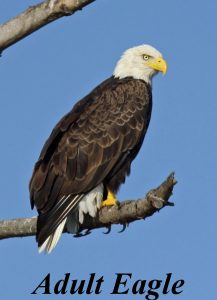
The Cornell Lab of Ornithology would like to remind us that, while the Bald Eagle our nation’s iconic bird, there are lots of other “American” birds out there. Enjoy