
By Jennifer Fairfield, owner Garden Mill
We finally got some significant frost around Chelsea in the last couple of weeks. That means that our vegetable gardens and annual flowers are mostly done for the season, and it really is time to do some garden cleanup.
In the Veggie Garden:
If you’re like me and have been putting off the chore of cleaning out your veggie garden, we should both probably try to get it done sooner rather than later, because we know it’s not going to stay warm forever. Pull any plants that are left and compost those that are disease-free. Toss any plants that had signs of disease into the trash, not the compost, so that you aren’t risking re-introducing those diseases to your garden next year.
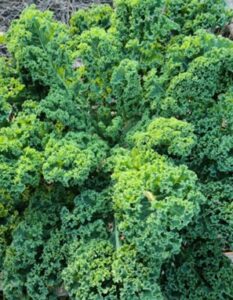
Kale, broccoli, cabbage, and Brussels sprouts can generally handle some frost, as can some lettuces, so don’t be in a hurry to pull those plants. Keep frost protection blankets handy if temps are predicted to go below about 30°, as too low a temperature will cause damage, but they could still be producing for some time yet.
You can leave root crops such as carrots, radishes, turnips, etc. in the ground over the winter, as long as you give them a really deep layer of mulch (such as straw or leaves) before the ground freezes. When you’re ready to use them, pull back the mulch and harvest what you need, then cover the rest back up again.
Pull weeds. Pulling weeds out of the garden now will help cut down on what you have to pull in the spring.
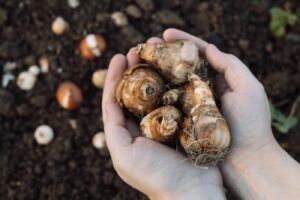
Plant garlic now. Fall planting gives the bulbs a chance to build up strong roots before going dormant, which gives them a head start on the spring and summer growing season. This means you get bigger heads of garlic than you would get with spring-planted bulbs. When you plant garlic, be sure to work in some fertilizer that is higher in phosphorous, which helps promote root growth, to help with that root growth. Cover your planting bed with a light layer of straw mulch to help keep moisture in. Then, once the ground is frozen, pile on a thick layer of straw – 6 to 10 inches is good. This helps keep the soil temperature consistent throughout the winter. If you haven’t gotten your garlic yet, don’t panic – we still have a few varieties available.
You can also plant peas and spinach at this time, to take advantage of the tendency of both to come up early in the spring. It can be hard to plant them early enough in the spring, because the ground is usually so wet. Planting them in fall means you can get a much earlier harvest. Again, mulch them well once the ground is frozen.
Flowers:
While some summer annual flowers, such as sweet alyssum, snapdragons, and petunias, can stand a bit of frost, the freezing overnight temps we’ve seen recently mean most of our summer annuals are done for the season, so it’s time to pull them. Compost them, as long as they are not showing any signs of disease. Otherwise, toss them into the trash.
Once you’ve cleaned out containers, store them somewhere where they will be out of the weather for the winter. You can leave them outside over the winter, if you take some precautions to keep them from filling up with water, freezing, and cracking. You can move them under a covered porch, or cover them with tarps, if they’re too big to move.
Just as with the veggie garden, remove weeds from your flower beds to give you a head start on next spring.
Once the soil has cooled down, add a layer of fresh mulch to your perennial flower beds to help protect the plants’ roots from frost heave this winter.
Plant spring-blooming bulbs. Daffodils, tulips, alliums, hyacinths, and crocus can be planted all the way up until the ground is frozen but doing it now gives them a chance to get some good root growth gong while the soil still has a little warmth. It also means it might be warmer for you, so you aren’t freezing while you’re out there planting.
If you’re new to bulb planting, or might be looking for some tips on the subject, this article from the Pennsylvania Horticultural Society is a great resource. If you’ve had problems with creatures digging up your bulbs in the past, try mixing them up with some baby powder in a bag (think “Shake-n-Bake”) before you plant them. Squirrels and such don’t like the smell of baby powder, so it might deter them. To keep deer away from your tulip bulbs and the tulip flowers come spring, I can’t say enough how great Deer Scram is. I have used this product in my own gardens for years and have had great results in keeping the critters away from my plants.
Trees & Shrubs:
We had some high winds in the Manchester area a week or so ago that brought down tree branches around my yard, so I need to add cleaning those up to my list of things to do before the real cold sets in. I also need to look to see if there are any branches that were damaged but didn’t come down that need to be trimmed. This is the only tree trimming that should be done between now and February, to avoid stimulating new growth that will be killed off in the cold and to help prevent disease.
Evergreens, as well as deciduous trees and shrubs, will do better with some protection from several things they can encounter in the cold months. The University of Minnesota Extension Service offers a great resource for information on what issues trees and shrubs may face over the winter, and how to deal with them.
While the ground is still soft, set stakes in the ground to use to attach burlap for wind barriers around evergreen trees and shrubs. You can wait a little bit to put the burlap up, but having the stakes in place now means you aren’t trying to pound them into the frozen ground. Protecting evergreens with burlap wind barriers will help prevent their drying out, which can lead to significant stress and eventual death of trees.
While we are still experiencing warmer and drier days, continue to water newly planted and younger trees, as well as any evergreens, regardless of their age. We have had an unusually dry fall so far, on top of the very dry summer, so our trees will need our help to keep them hydrated going into winter when the frozen ground makes it impossible for trees to replenish water lost to wind and sun. Be sure to fully empty hoses after each use at this time of year so that you don’t risk having the water in them freeze and expand, causing the hose to crack when temperatures dip below freezing at night.
As with your flower beds, add a layer of fresh mulch to trees and shrubs, once the soil has cooled, to help protect them from the cycles of freezing and thawing that we always get during winter.
Lawn and Leaves:
If your lawn needs one final mowing for the season, do that soon. Otherwise, I would say that it’s safe to put lawn mowing equipment away for the season, given the number of frosty mornings we have had.
One other thing you might consider using your mower for before putting it away is to use it to shred the leaves that have fallen and mulch them into the lawn. Leaving lots of whole leaves on the grass over the winter can lead to disease and dead patches, but shredded leaves will help return nutrients to the soil as they break down. The other option for all those leaves is to rake them into your flower beds and over the roots of your trees and shrubs as mulch.
Tools:
When you’re all done with your garden clean-up, there’s still a little bit more to be done. Clean, dry, sharpen, and lubricate your garden tools before you put them away, so they’ll be ready to get right to work in the spring. Sharpen your shovels, too. You’d be amazed at how much easier any digging job is with a sharp shovel.
Empty your hoses, roll them up, and tie them before hanging them up for the winter. Connect the ends of each hose to keep spiders from using them as nesting places. Put sprinkler heads and wands all in one place, they are easy to find come spring. A small trug (one of my favorite garden tools) or bucket works well for this. If you have rain barrels, empty them and put them away too.
For the Birds:
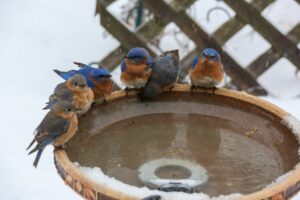
Leave your birdbaths out and filled as long as possible. Many birdbaths don’t hold up to being out in freezing temperatures while filled with water. To continue to provide the birds with water for as long as possible, you can fill your birdbaths up during the day and dump them out in the evening, until daytime temps start going below freezing. If you have a birdbath that can stand up to the freezing temps, consider putting in a de-icer or getting a heated birdbath. De-icers and heated birdbaths allow you to provide a vital source of water for your birds all through the winter, without risking damaging your birdbath.
If you don’t feed your birds year-round, from now to next spring is the best time to do so. While birds rely mainly on insects during the summer, seeds and berries become the main source of food in the winter for most birds, but they can’t always get enough protein from those and can waste precious energy hunting for food. Providing an easy source of food for them will help them get through the cold days and nights of winter, and it lets you enjoy their antics at the feeders, too. Just remember to clean the feeders regularly to help prevent the spread of disease.
If you haven’t done so already, consider participating in Project Feeder Watch, a joint research project of the Cornell Lab of Ornithology and Birds Canada that runs from Nov. 1 to April 30 each year. You can choose to participate as little or as much as you like – all data collected helps in understanding bird populations. There is a small ($18) fee to participate that helps cover the cost of maintaining the database and other materials, but it can be a great way to get familiar with the birds in your area, and is a wonderful way to spend a winter afternoon, especially with young children.