
(Chelsea Update would like to thank Jennifer Fairfield, owner of the Garden Mill, for the information in this column. Part 1 of this column ran yesterday.)
Flowers:
Just as with garlic, spring-blooming bulbs can still be planted until the ground is frozen, so take advantage of the fact that the ground is still soft to get in some last-minute bulbs.
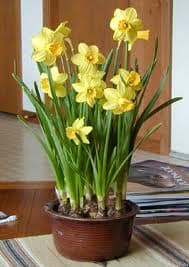
Or, consider forcing some bulbs indoors this winter. Tulips and daffodils in bloom in your house in March can provide a welcome breath of spring, when it’s still winter outdoors and you can’t really do any gardening. You’ll need to provide your bulbs with a chilling period first – for as long as 12 weeks – so now’s the time to start.
Once the ground has frozen, pile mulch on top of your perennials to help protect them from changing temperatures throughout the winter. Frost heave can cause damage to plants when roots are pushed up out of the soil as the soil “heaves” up when freezing causes it to expand. Frost heave usually happens when the soil thaws and then freezes again. Most plants don’t survive these sorts of conditions, so a good mulch cover can keep the soil frozen during the winter, helping to prevent damage.
Make sure you wait to pile on the mulch, though. Doing so before the ground freezes can cause the plants to rot.
Trees and Shrubs
Put up wind screens for your evergreens. The screen should be placed along the west and southwest sides of the plant, and possibly all around, depending on where your plants are placed, and how much wind they are getting. Do not totally cover the plants – leave the top open – so they can get sun. Burlap (available at the store) is the perfect product for this project.
Consider spraying evergreens with an anti-desiccant to help keep them from drying out in the cold winter winds. When the ground is frozen, plants can’t take up water, but evergreens especially can lose what water they have when it’s windy.
Anti-desiccants put a thin, waxy layer on the needles that helps the plant retain moisture. It’s important to wait until the plants are fully dormant – usually around the time that the soil is completely frozen, and to follow the directions on the label. There are some studies that have shown that anti-desiccants aren’t very effective, but I know lots of gardeners and landscapers who swear by them.
If you have deer and rabbit problems, take some precautions to protect your trees from damage this winter.
One option is to wrap tree trunks up to 18” to 24” inches above the snowline. Of course, it’s almost impossible to know how high the snowline might be in any given winter, so I tend to err on the side of higher.
When the snow and ice come (you know they will), be careful about removing snow from tree and shrub branches. Heavy snow can weigh down and potentially break branches, but it’s easy to do more harm than good, if you’re not careful. Use a broom, and gentle upward motions to sweep away the snow. Banging on frozen branches to shake off snow can break them. If we get ice that coats the branches, just leave it. You are likely to do far more damage trying to remove it than the ice will on its own.
If you are getting fresh greens for the holidays, such as a wreath for your front door and roping for your porch railing or fence, keep them fresh longer by spraying with water when the temperatures are above freezing.
If you are bringing greens inside, including a Christmas tree, you can spray them with an anti-desiccant before bringing them in to help prevent drying. Make sure to follow the label directions, and allow the tree or greens to fully dry before bringing indoors. And don’t forget to put your tree in water and replenish it regularly throughout the season – dry trees can be a real fire hazard.

Birds
With the cold temperatures, birds can use all the help they can get in the form of food, water, and shelter.
Keep your feeders full, so that the birds don’t have to waste precious energy searching for food. Also keep them clean, to help prevent disease.
Clean out your birdhouses, but leave them out for the winter, if they are not susceptible to breakage from freezing temps. Birds will be thankful for an empty birdhouse to huddle together in to keep warm at night.
Consider putting a de-icer in your birdbath, so that your birds have a source of fresh water all winter. Water is as essential as food, and becomes much harder to find in the winter.