
By Jennifer Fairfield, owner of the Garden Mill
(Publisher’s note: Part one of this column ran Friday and part three will run on Sunday.)
With the warm-up this week, you might be tempted to go out and get everything done in your garden in the upcoming days.
To that I say – slow down.
There are certainly a number of things that you can get done in the early part of the month, but there are also a number of things that are better left for later – even the end of the month – if you want to be really safe.
Vegetables and Herbs:
Among the things to wait to plant until late in the month are basil, tomatoes, peppers, eggplant, cucumbers, and squashes.
These warm temperature loving plants may not survive even a light frost, so it’s generally best to wait until there is no danger of frost. Our average date of last frost is around May 15 (possibly a few days earlier if you live right in town, and a few days later if you live in the more rural areas).
But aside from frosts, even cooler weather can shock young plants, causing delays in their growth and fruit production. Waiting just a little longer than you might initially want to can mean that your plants will have a better chance at getting going right from the start.
The best indicators that it’s a good time to plant them is when nighttime temperatures are consistently over 50°, and soil temperatures are consistently over 60°. Use a soil thermometer to check soil temperatures – it’s the most accurate way to know when it’s safe.
There are some things to plant now, though – onions, potatoes, strawberries, asparagus, broccoli, cabbage, and kale. Don’t wait too much longer, though.
Once it gets really warm, you run the risk of cool-weather plants like broccoli and cabbage bolting (going to seed, and being inedible). Onions and potatoes need a pretty long growing season, so waiting too long to get those planted could mean that you end up with little or nothing to show for your efforts at the end of the season.
Strawberries and asparagus will need all the growing time they can get this year, and into next year before you see anything edible, so getting them going early will help them get established.
Seed potatoes, onion sets, strawberry roots, and rhubarb roots are all on sale at the Garden Mill now.
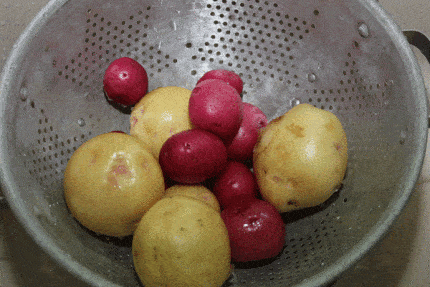
I’ve been saying it for a number of years, but it still bears repeating – you really should consider growing your own potatoes.
Commercially grown potatoes tend to be grown using lots of pesticides. The reason for this is that potato beetles are some of the most destructive pests in the world of crops, and they are also very difficult to kill.
So, potato growers tend to go after them with large amounts of chemicals. If you’re not interested in consuming lots of pesticide residue with your meals, growing your own potatoes organically is a relatively easy alternative. If you’re not sure how to get started, MSU Extension service has a great pamphlet with lots of information on growing potatoes.
Seeds to plant now include spinach, lettuce, carrots, radishes, and beets. About mid-month, it’s safe to plant beans of all sorts. Squash, cucumber, dill, and cilantro seeds can be planted directly into your garden mid-month as well.
We will have seedlings for a variety of locally grown tomatoes, peppers, eggplant, squash, cucumbers, and herbs available at the store in the coming weeks. Many of these will be organically grown.
When you plant your seedlings, start a program of fungicide immediately, and keep at it on a regular basis. We have had a lot of disease pressure the last few years, and the cold, wet conditions in April won’t help alleviate any of that.
So, as soon as you plant things like tomatoes, peppers, and squashes, spray them with an organic fungicide (my favorite is the Serenade Garden Disease Control we carry at the store), and then reapply once a week – or more often if we are getting heavy rains.
The only way to deal with these diseases is to stay ahead of them. Once they take hold in your garden, it’s really too late.
(Publisher’s note: part three of this column will publish on Sunday.)