

(Chelsea Update would like to thank Frank Hammer for the information in this column.)
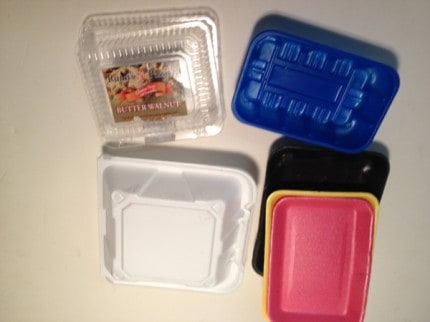
Styrofoam is cheap, infinitely moldable, lightweight and sturdy.
It’s great for insulating houses and packaging fragile items, makes a sturdy tray for beverages and take-out containers for food.
Most Styrofoam, true to the “foam” in its name, is made of “whipped” Polystyrene (that’s a fancy chemist’s word for this particular plastic). Just like almost clear egg whites become foamy, white and stiff when whipped, Polystyrene becomes foamy white when whipped with nitrogen. Then colors can be added and it can be easily molded. When dried, it is rigid.
Sometimes, Polystyrene is not whipped, and makes a non-foamy container that may resemble a recyclable plastic. These containers are used for things like produce baskets and many of those hard-to-open clear bubble-packs used for batteries, hardware and small electronics.
 Both versions—whipped or plain—are made for single use, only. And at present, they are not a recyclable material. When they wind up in recycling stream, the stuff flies around everywhere. The Styrofoam “dust,” which comes from breaking up the large-container packaging, mucks up the equipment. And those packing peanuts – they are a special nightmare, because they often fly into the broken glass bins. This makes the glass impure, and the entire bin, glass as well as Styrofoam peanuts, has to go to the trash. This wastes the resalable glass, costs WWRA a landfill fee and labor costs, and winds up in a landfill.
 If you use Styrofoam, remember to take it out of the recyclable cardboard boxes it come in, then put the Styrofoam with the food trays and the to-go cups and containers in the trash.
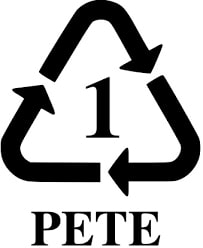
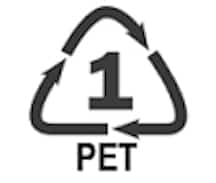
A tip: Look at the bottoms of the containers to see if they have PET or PETE logos. If so, they can be recycled. If not, into the trash they go. (We’ll delve further into PET and PETE in upcoming weeks.)
Next week, Reggie the Recycling Racoon will talk about plastics, what you can recycle and how you can determine what’s recyclable material and what’s trash.
For now—when you have Styrofoam or Polystyrene, think “into the trash.”
Reggie Raccoon’s Royal Recycling Review:
- Recycling puts materials back into use; trash is for things that cannot be used again.
- Flexible plastic of all kinds go in the trash, not in the recycling bins.
- Remember there are some alternative uses for plastic bags on their way to the trash.
- Styrofoam and Polystyrene are good for packaging, but have to go to the trash.